On Saturday, Oct. 10 from 4 to 5 p.m., the Clay County Historical Society will partner with the Moorhead Public Library to host a panel discussion with a number of rock poster artists from the 1990s and 2000s. The event will be moderated by Markus Krueger, research historian and outreach director for the Clay County Historical Society.
In this era, there was a fair amount of crossover in art and music circles, many of which intersected near Minnesota State University Moorhead (MSUM), Kirby’s bar (a Moorhead mainstay) and Ralph’s Corner Bar, which was demolished in 2005. Not only was Ralph’s the oldest bar in the area, it became a rock ‘n’ roll destination. It was a countercultural hub that was even recreated in a 2022 exhibition at the Historical and Cultural Society of Clay County.
The panel at the Oct. 10 event features artists Justin Seng, Amber Fletschock, Amy Jo, Lon Jerome and Micah Dahl. An after party will be held at Harold’s on Main from 7-10 p.m., where plenty of vinyl (and yarns) will be spinning.
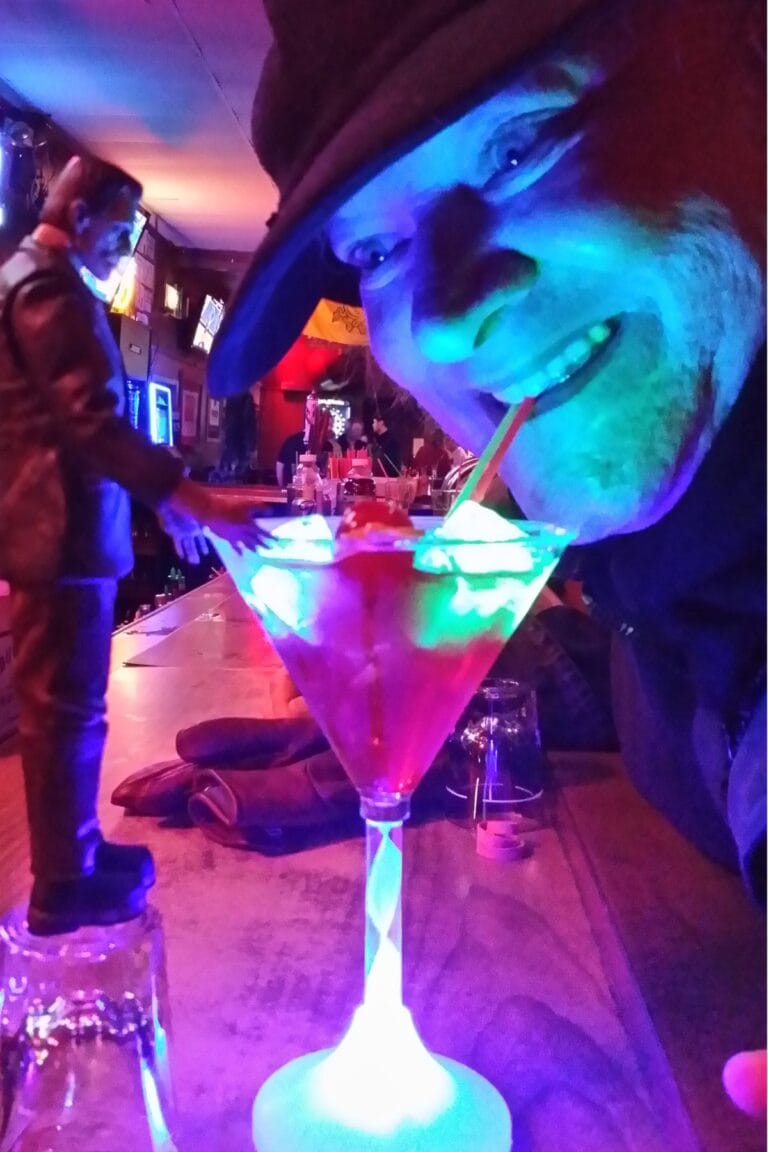
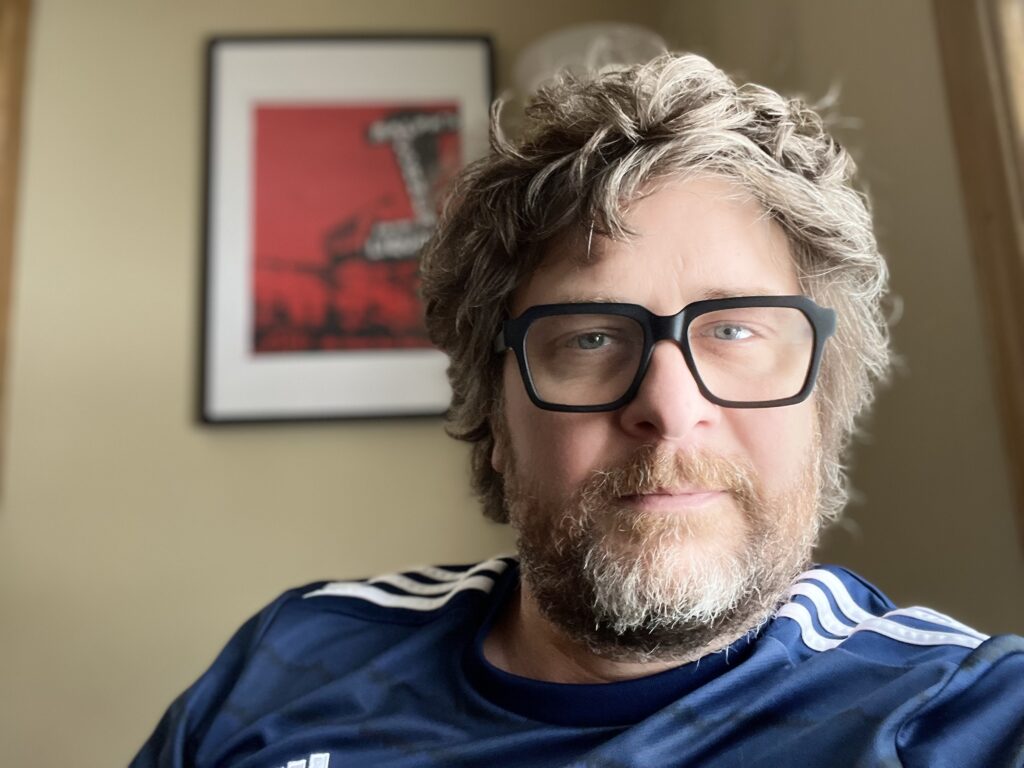
High Plains Reader had the opportunity to chat with Minneapolis-based artist, filmmaker and musician Micah Dahl, who will be participating in the panel discussion.
High Plains Reader: Tell us about your experience, including how you found Ralph’s and the atmosphere there. Why do you think it was such a hotbed of creativity? And what or who got you hooked on the venue?
Micah Dahl: My part in all of this was more or less being in a band and being a part of the scene starting in high school. So, like, 1993-94 or so, I started playing music in bands and going to all ages shows. So my introduction was just playing shows, seeing flyers, meeting people who made them.
People like Bjorn and Amy Jo — they were team Fargo — they set shows up. Then, from there, just meeting more and more people and basically helping organize shows, needing to make stuff and just using what was around to simply put a flyer together and then get it all copied and go to places to put it up.
I wasn’t a part of MSUM and didn’t go there. (Well, part time for a year, but I was making music and making films and skate vids on my own and just thought, don’t spend the money on school yet — I’m trying this music thing out, because it seemed quite tangible and exciting.) Of course, being a part of the scene, I knew lots of people in the art department so I was surrounded by people that were creating and learning from them — but didn’t go to MSUM.
As for Ralph’s, once I was 21, it — of course — was the spot. It was the epicenter for creativity — art students, shows, just anyone really in the art scene, music scene etc, that was our bar. That was where the over 21+ shows were. It was really the epicenter of the creative pulse of the FM area basically — which really was a huge disappointment when it was decided to be torn down.
The atmosphere of Ralphs was that of just creative spark — punk rock beauty and hazy, smoky inspiration. So many bands playing — and the scene was small enough that it was just all of the arts — design, music, film. It was really something and in the scene overall. I see or remember it as very collaborative and overall just bands and creatives really helping each other out.
HPR: How did you get started on making gig posters? Who was your main contact and how did you take commissions?
MD: Posters, for me, were more out of necessity for shows I was setting up — or even shows I wasn’t setting up. I was making flyers.
They were all super DIY punk. My posters are mostly made from what was around. I worked at a video store so I’d take posters, make stuff out of them. But obviously, my posters were very simple — cut out paper taped onto a poster then copied.
Also, just making stickers was similar. Take a photo, put your band’s name on it, etc. I’d like to find stuff from thrift stores or garage sales, weird books with interesting images that maybe people wouldn’t know where they were from, but also using posters from movies, etc. My poster work, again, was mostly just out of necessity and what was around. Later on, learning how to silk screen, but always even keeping that super simple.
HPR: What inspired your designs — and do you have a favorite poster from the Ralph’s days?
MD: Again, my aesthetic is simple DIY punk rock — get a poster made, get the word out — and was less on design quality and design elements, which I hugely admire. My inspiration was mostly what is around me that I can make something with?
As for being inspired, and my favorite posters? Really, almost anything from Amy Jo, Lon, Barrett Haroldson, Aesthetic Apparatus, of course — true artistry.
HPR: How do you feel your music — or maybe how music in general — inspired your visual art?
MD: Well, not sure exactly how the music I helped create in Floid Matrix, 800 million or Isaac Breaks Glass maybe inspired people or just myself in general. I did make most of the posters for shows that we played. Well, I made a number of them, of course. Again, my MO was mostly what was around, available, being inspired by skateboarding and films and tying some of that into posters.
I learned how to silkscreen from Phil Leitch, who is a great artist and hugely important in the scene as well. I think mostly I was inspired by the people around me, just this “Hey, we are doing stuff, let’s just all do stuff.”
And I think in the 90’s, for me, there was a little bit of mostly trial and error and a bit less refinement, not only with the art but the music. It was a group of people learning and pushing each other to craft and create in really any way, from zines to music to posters to skateboarding. It was all just a really amazing collective of people and I certainly feel more inspired by those around me and helping work together.
HPR: I’m thinking of my days at MSUM and seeing these beautiful screenprinted posters all over town, taped in various business windows and bulletin boards and even stapled to various electric poles off campus. What’s it like seeing this art in a gallery/museum setting?
MD: Well, I’m a little bit of the odd man out, as I didn’t go to school for graphic design. And my poster art experience is certainly more of just being in the band or helping organize shows, so I’ve not had anything in a gallery. But I have had a great number of music videos and short films and short docs showcased and I can tell you that feeling is really lovely.
HPR: If someone told you back in the 90s or early aughts that the work you were making would end up in an exhibition like this, what do you think your thoughts would be?
MD: I would have laughed, most likely. Or quietly thought “Ah, whatever, no way.”
I actually emailed Markus to say “Should I really be a part of this? My work is all DIY, punk aesthetic and I didn’t go to school for design.”
He had a lovely response, talking about how the stuff I made was a great part of the scene. So yeah, I’m here because I did spend a long time in the scene and helped in a lot of different ways, which I think was also a big part of the scene — very collaborative on all mediums.
HPR: You have a pretty impressive resume. Where has your work taken you since Ralph’s? I know you also made a Ralph’s documentary and created multiple works that have screened from Fargo to London, can you tell us a bit about that too? You’ve also played in bands…
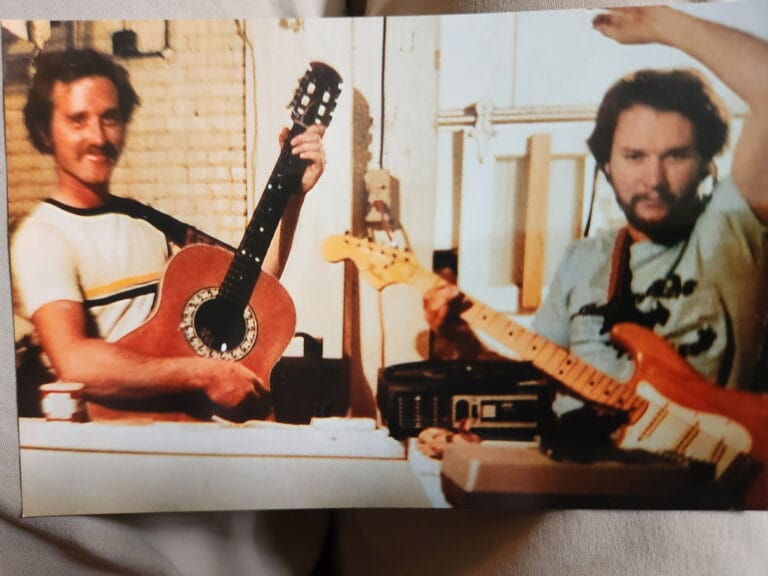
MD: It all started with playing in bands, from Los Micros, Floid Matrix, 800 million, The Malmbergs, Isaac Breaks Glass. So being a part of the scene started with playing music, meeting people, learning about screen printing, making posters to promote shows and the collective nature of the scene, which was incredible people putting on shows and bringing in bands. It was a little pipeline from the Pacific Northwest to get east — and bands east going to the Pacific Northwest so that was really amazing. The scene certainly crafted its own sounds, but being influenced by Minneapolis and the Pacific Northwest, for sure. Just a really great period of bands coming through and opportunities within the scene to play.
As for filmmaking, I had been doing that while, being a part of the scene. I had a big old VHS camcorder, so I made skate videos and lots of sketch/skit work and short films as well. I organized a short film showcase with people I met in the MSUM film program and had a showcase with short films and then bands after. It was super fun and I think that type of mixed medium DIY attitude was what really made the scene, whether it was poster art, music, film, performance art, etc. That attitude of DIY really has played a role in all the things I’ve accomplished in my career, just that go-and-do-it-and-try attitude and learn from your mistakes.
Finally, I did end up at MCAD, and started really crafting music videos for projects, as it bridged the two main things I was/am a part of — and just kept on going from there. I’ve kept on being creative outside of work with short films and music videos. That just keeps my creative itch covered. But also all the things I learn from working as a full time editor/motion graphics artist goes right into all the creative projects I’ve made and keep creating outside of my professional work.
Screening works has been a real accomplishment of course, flying to London to see old friends and then showcase music videos and a short film on different occasions has been certainly a highlight — also in Fargo and Minneapolis. I’ve had many things screened that I couldn’t make it to. It is, of course, a lovely feeling to know that the work I’ve created is worthy of being curated into a film fest.
HPR: Do you feel like there was a Ralph’s aesthetic? Or was the aesthetic just eclectic? If there was an aesthetic can you describe it?
MD: I think I mentioned it a bit above. The Ralph’s/FM scene aesthetic, I feel, was a bit less refined at times — music and film, for sure. The artistry in design that the rest of the panel has been involved in, you can clearly see the detail and practice of how incredible the work is and has been.
As for me, though, I always talk about the culture of collaboration of the scene — bands working together, regardless of the type of music overall, working together to promote shows through poster art, etc, I feel the scene really had a beautiful sense of community, and that’s one thing I really appreciated about it. And it just carried this “well f*ck it, lets just do this” attitude.
HPR: Speaking of gig poster design, aside from the who, what, where, what are the top three elements that make a successful design? Please tell us a few tricks of the trade…
MD: Ha! Heart, attitude, what you have around!
IF YOU GO:
Rock Band Poster Artists from the 1990s-2000s panel discussion
Saturday, October 10, 4-5 p.m.
Moorhead Public Library, 450 Center Ave., Moorhead, MN
Rock Band Poster Panel After Party
Saturday, October 10, 7- 10 p.m.
Harold’s on Main, 1330 Main Ave., Moorhead, MN