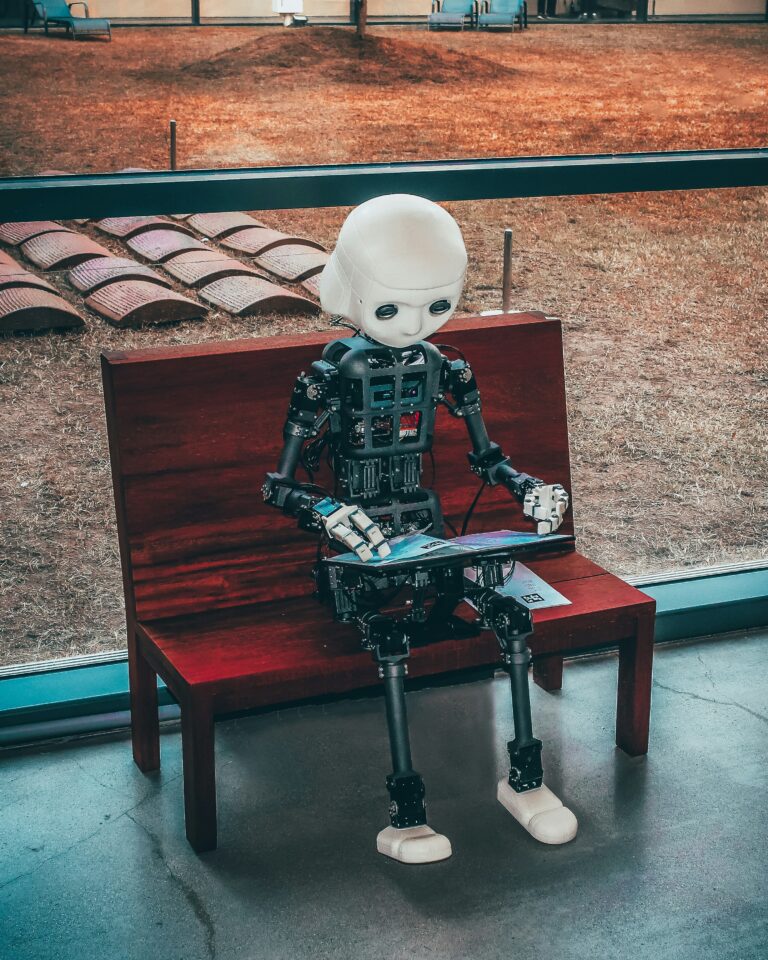
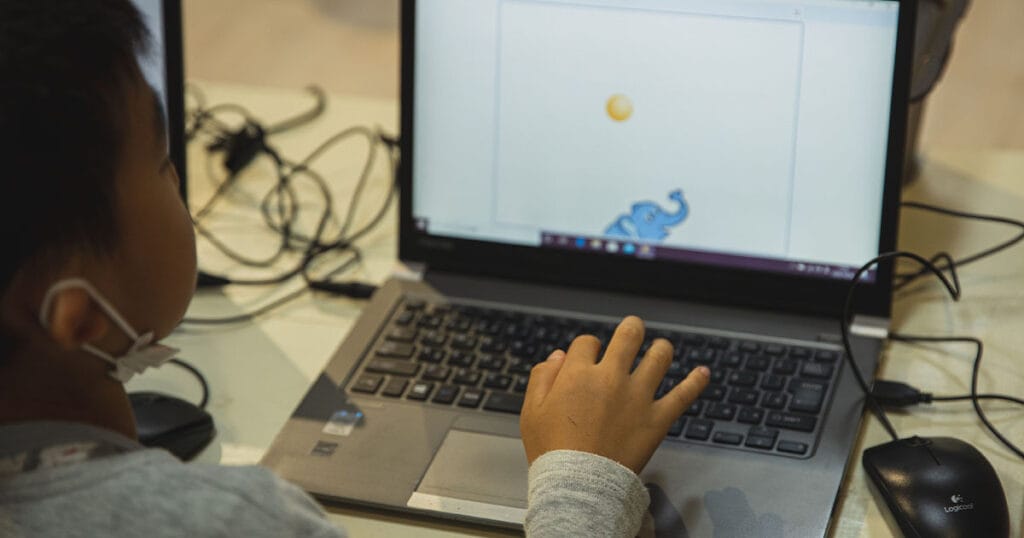
“…dropout rates climb to 20% higher for distance learning when compared to face-to-face classrooms. I wonder what role AI will play tomorrow.”
Over promised and under performed
Imagine it is the 1920s. You are sitting in your high school science classroom and your teacher tells the class that he just read what Thomas Edison had to say about the big changes motion pictures will cause in education, like making school more interesting for students. Quoting from Edison, he reads, “I believe that the motion picture is destined to revolutionize our educational system. The education of the future, as I see it, will be conducted through the medium of the motion picture, where it should be possible to obtain one-hundred percent efficiency.”
Edison’s passion for motion pictures and schooling was questioned by many, including the U.S. Commissioner of Education, over concerns about oversimplified learning, too much passivity, lack of interaction and less critical thinking. About the same time, classroom radio was also pitched as a technology that would improve schooling.
“The dominant aim of education by radio is to bring the world to the classroom, to make universally available the services of our finest teachers, the inspiration of the greatest leaders, and unfolding of world events,” wrote Benjamin Darrow, founder of the Ohio School of the Air. Radio instruction, it was believed, would become a regular part of classroom life. However, critics voiced the same concerns with radio instruction as with motion picture instruction.
Beginning in the early 1950s, similar beliefs were held and promises made about the transformative effects instructional television would have on learning. B.F. Skinner joined these technological-promise makers by declaring these teaching machines — combined with programmed instruction — would help students learn twice as much and twice as fast as they did in standard classrooms. Amazingly, some advocates even promised to reduce the economic and social gaps experienced by underserved students through this media, while critics questioned the passive lecture-style presentations, often used in mass instruction for hundreds of students. The teacher’s role was also a worry, downgraded to simply monitoring the classroom and managing the technology. By 1971, $100 million dollars of private and public money was spent to support classroom-based instructional television, amounting to 830 million dollars in 2026.
Similar guarantees continued with Chris Whittle’s Channel One instructional television project, running from 1990-2018. During this time, middle and high schools received free equipment in exchange for 10 minutes of contractually-obligated daily news viewing, rich with two minutes of commercials selling Pepsi and Levi’s jeans. Advertisers paid up to $200,000 for a 30 second commercial slot. This 28-year project reached 8 million students. Again, we saw criticism of this technology and the loss of 60 minutes of weekly instructional time for poor quality news programming.
Promises of technology transforming schools continued with school-based computer labs and computer-aided classroom instruction in the 1980s followed by the delivery of desktop computers for each and every student in most districts nationwide by the 2010s. This technology was guaranteed to expand student learning. For example, it was said to provide access to wide-ranging and rich educational resources, to deliver personalized learning and make available digital literacy training. On average, America’s K-12 students spend about 350 minutes daily in classroom instruction, with nearly one third of this time spent on screens. Yet digital literacy scores continue to decline, as do measures of critical thinking and problem solving. Internet access grew rapidly from 36% of public schools in 1995 to 85% in 1997 to nearly 100% today.
Distance learning is part of this broader story. Many see it as democratizing education by removing barriers to learning, while using technologies of the day — mail correspondence, radio, instructional television and now the World Wide Web — to deliver instruction. While distance learning may be a viable alternative for some students with excellent reading and writing skills, dropout rates climb to 20% higher for distance learning when compared to face-to-face classrooms. I wonder what role AI will play tomorrow.
Encountering reality
Total nationwide expenditures for K-12 instructional technology in 2026 is expected to reach $105 billion dollars, which could pay salaries for more than one million public school teachers. Like with the promises of previous instructional technologies, some of today’s “had to have initiatives” are being questioned, limited or even eliminated.
For example, smart phones, once viewed as efficient hand held, in-class personal computers, are now banned in educational systems across more than one-half of the world’s countries. The global change came quickly. A total of 24% of countries implemented bans in 2023. Three years later, 58% ban phones. Nationwide, 38 states have banned or restricted their use, including North Dakota. These “learning tools” are now seen as sources of distraction, social isolation and threats to students’ well-being.
Currently, 16 states passed legislation or are advancing legislation to re-evaluate the role instructional technology plays in classrooms, particularly reducing screen time. The key player is Google’s Chromebook, first introduced in 2011. North Dakota legislators are reviewing Chromebook usage guidelines, while Minnesota is moving away from its use in elementary and middle schools.
Why? Research evidence suggests that too much screen time interferes with learning, attention span, engagement and social interactions and promotes off-task behavior while negatively affecting student well-being. Too much screen time is also associated with behavioral problems and mental health concerns and can create internet dependency.
This is not an anti-instructional technology declaration
I believe computer technology in classrooms can support and enrich learning, when thoughtfully used. We must engage students critically in thinking about how this technology shapes the way they think and communicate. I agreed with Roland Hachmann, Educational Researcher, when he wrote “The goal should be to foster technical literacy — the ability to understand and question its cultural, educational and political consequences.” This is a promise I sure could get behind.
Some research suggests that reading from printed text improves comprehension more than digital reading. This is critical: reading scores for America’s students have declined over the past decade. And as we know, learning is holistic, experiential and active, social and emotional. It is also deeply human, whereas computing is essentially solitary and passive. I believe that education, at its core, is a people process. And yes, students need tools, but they need large amounts of time with people who care about them, their families and their learning.
How did Chromebooks come to be a solution for promising to tackle many schooling challenges and yet fall on hard times — particularly when evidence was lacking for the grand claims made? The story is similar to that of motion pictures, radio and television. Although one distinctive difference plays out — Google spent $250 million over the past 20 years to sell its products and services to schools. This selling and buying is sometimes referred to as the Googlification of the Classroom. School districts were encouraged to believe this tool would reform education and better prepare students for the future by solving serious and enduring challenges.
And Google’s efforts paid off for them. Today, about 80% of the nation’s 13,500 public school districts provide Chromebooks for their 400+ million students. Google’s messaging used effective marketing, budgeting pressures and ready assistance, with a mantra of “You will fall behind, if you don’t go digital 1:1 — and all for only a few hundred dollars per student!”
As the messaging went, these devices were secure, cost effective, reliable and easy to use and administer. Ultimately, they could replace textbooks and other expensive classroom-based materials. They could improve several aspects of schooling — for example, helping students learn faster and more, individualizing instruction to meet students’ needs, allowing teachers to access timely student data and making grading easier — while reducing teachers’ workload. A perfect storm occurred as Chromebooks were rolled out about the same time many states adopted online testing programs. Professional development, administrator training and curriculum resources were offered to districts at no-charge, creating a Google-infused partnership. It’s the round peg in the square hole scenario once again, as Chromebooks’ promises exceeded reality. For example, they certainly did not raise student test scores nor lessen teacher workloads.
All of these classroom technology examples reflect long-standing criticism that schools resist needed reform and so require outside-of-school change agents to make improvements. This criticism, when matched with new technologies thought to transform classrooms, were thought to provide the promised solutions. Promotional messaging often exaggerates promises, presenting tools as profitable magic bullets.
Too often those least familiar with the complexities of day-to-day classroom life propose reform ideas having little to do with teachers’ work in the classroom — and as a result, fail. For example, Bill Gates and Mark Zuckerberg’s $2 billion+ school reform plans that failed. For more examples of worrisome instructional technologies, see “100 Worst Ed-Tech Debacles of the Decade” by Audrey Waters.
Complexities of schooling
Schooling is filled with many complex challenges, like meeting the academic, social and emotional needs of a classroom filled with 30 students, responding to chronic absenteeism, supporting complex behaviors like depression and anxiety and advocating for students who live in poverty and/or are unhoused. We must remember that what goes on in classrooms is anchored in the 24-hour lives of students and their families, the communities in which they live and their teachers. This realization demands caring and competent teachers skilled in using many varied approaches to help students learn and overcome the challenges and trauma that too many bring to school each day. I have taught in pre-schools; elementary, middle and high schools; and a college; as well as homeless shelters, juvenile detention centers, and with children and adults with disabilities for over 50+ years and understand that teachers’ work is serious, constantly changing, demanding and extremely complex.
Research shows that the teacher is the most important factor affecting students’ academic success and social-emotional wellbeing. The teacher’s role extends well-beyond classroom instruction and all its moving parts — they are architects, counselors, coaches, mentors and more. Teachers work with diverse groups of students each day, some who struggle, some who soar and everyone in between. In the United States today, one in seven children live below the federal poverty level, which is $33,000 for a family of four and 20-30% of K-12 students do not receive sufficient food on a daily basis. The local school where I currently volunteer serves a student body that is 72% low-income, with 29% of students reading at grade level.
Helping more students arrive at school ready and able to learn and succeed requires many, many actions. One such action that improves students’ lives outside the school walls so they learn more inside the school walls is a more equitable economy. It can be characterized by willing and engaged community partners and providing affordable daycare and universal Pre-K.
Another is eliminating barriers to opportunity and providing appropriate vocational training and apprenticeships and quality employment. The minimum wage must become a living wage to move children and their families out of poverty. Universal health care must be a legislated policy to keep families healthy and eliminate medical bankruptcy.
Ensuring that all students have access to a high-quality education, regardless of ZIP codes, could occur by moving school funding away from local and state taxes to a more equitable nationalized formula. Sadly, the percentage of the gross domestic product being spent on public education has dropped from 3.8% in 2000 to 3.4% in 2025. Obviously a broad, multi-faceted plan is needed to improve schools, so more students achieve at high levels, and are prepared to be knowledgeable and engaged future citizens.
Schooling challenges are social, emotional and human in nature, but often we tend to reach for quick-fixes. But like with all complex issues and problems, the key is thinking critically and asking hard questions about schools’ purposes, so we know exactly what kinds of students and society we want and need.
We know that instructional technology can make positive contributions to students, but often its promises are over-sold. Schooling is complex and requires many and varied approaches to solve the problems students experience inside as well as outside the school walls.