

To the editor:
Moorhead, Fargo and West Fargo city policies on Flock cameras say we have no reasonable expectation of privacy driving on public streets. Therefore, the policies summarily dismiss privacy concerns and claim it is okay to install these Automated License Plate Reader (ALPR) cameras on light poles to capture all of us driving around doing errands, going to church, to the doctor, to visit friends — all without a warrant.
The language used in these local city policy declarations is from a 1983 U.S. Supreme Court case (Knotts) in which police, in a drug investigation, installed a tracking device in a chemical company’s five-gallon container of chloroform (a product used to make methamphetamine) being purchased by a person in Minnesota suspected of drug crimes. The purchased container of chloroform was loaded into the suspect’s car. When police tracked the container by visually following the driver and using signals from the tracking device, it was eventually located at a cabin in a remote area of Wisconsin. That cabin owner was defendant Knotts. He was convicted of operating a meth lab and appealed his conviction on grounds his privacy was violated by the tracking device. In a narrowly written decision, the Court found no reasonable expectation of privacy because the person who drove from the chemical company to the cabin in Wisconsin was driving on a public road when tracked by the electronic device. In its opinion, the court said such use of technology to track people would be revisited as technology improved. Well, it has.
Now we have cameras using artificial intelligence watching our public movements and saving those movements in a searchable database. It doesn’t matter if we are law-abiding or suspected of making meth. Our law enforcement community is using a 1983 drug case to treat us as if we are living in George Orwell’s “1984.” We are all treated like the drug suspect in Knotts. A recent U.S. Supreme Court decision (Chatrie) said looking at our cell phone location history is a search, and cited a prior Supreme Court case (DiRe) for its assertion that the Fourth Amendment was designed “to place obstacles in the way of a permeating police surveillance.”
Flock is an $8 billion dollar company that has monetized our privacy. There are other companies doing the same. There will be another day in court for those who want to track us. Meanwhile, our local cities’ ALPR policies are disregarding our privacy rights to justify watching everyone, regardless of suspicion.
Peter Karlsson, Moorhead, MN
Joe Parise, Glyndon, MN
 Vote yes for wards October 6, 2026Sep 30, 2026
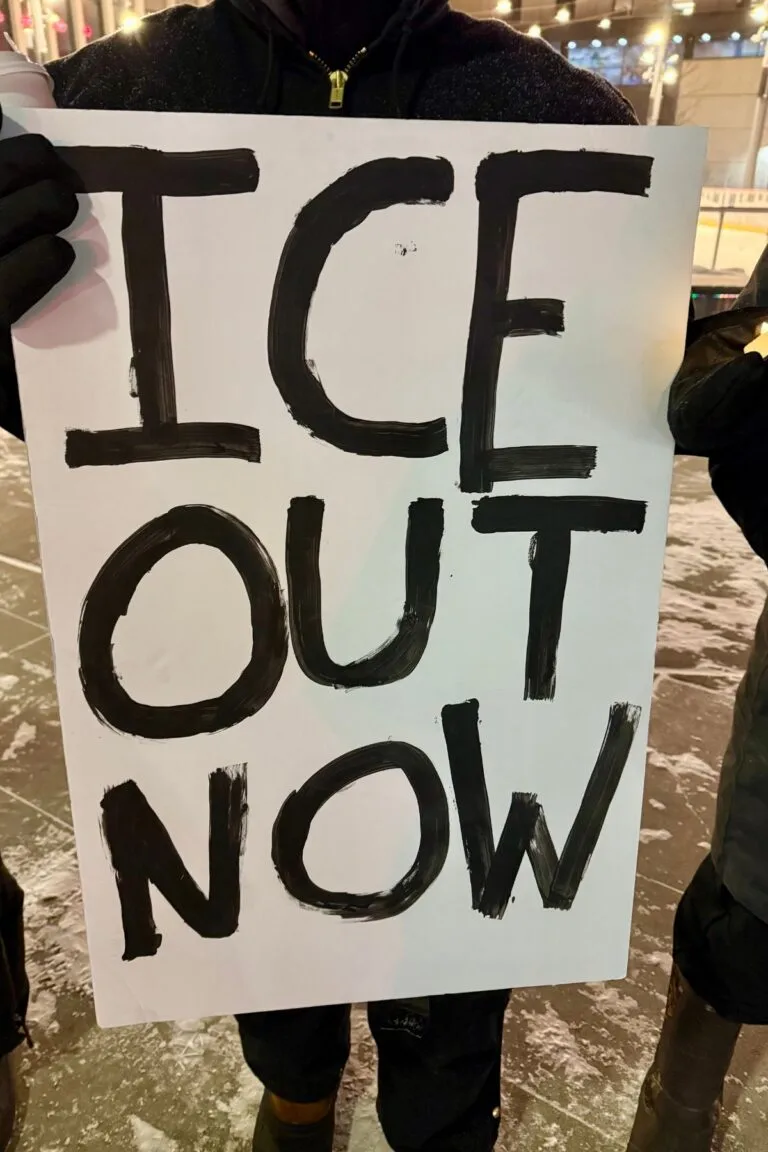 ICE out of MinnesotaJan 23, 2026
 Standing united with our Somali neighborsDec 18, 2025
 How our communities send their own champions to serve themAug 19, 2025
 North Dakota landowners and townships opposing JETx Transmission LineJun 19, 2025
 North Dakota can’t afford this boondoggle of a budget billJun 2, 2025