
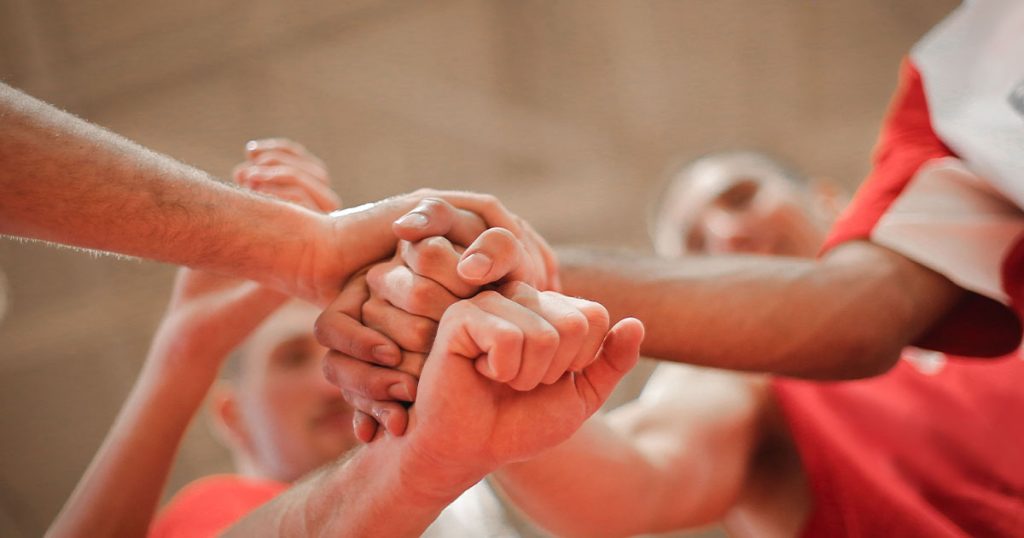
The YMCA of the Northern Sky is celebrating 140 years this year, predating North Dakota statehood by three years. They have a colorful history and a lot to celebrate. The organization has touched many lives in varying capacities with its all-inclusive, community-based mission.
“I don’t know why it’s just hit me here in the last year, but I think about the Y as a bunch of doorways,” said Steve Smith, YMCA of the Northern Sky president and CEO. “The doorway that you enter the Y shapes what you think the Y is. So if you come in for fitness, that’s what you think we do. But if you come in as a childcare parent, you think that’s what the Y does. The task that I’ve been trying to get across to staff and volunteers over the last year is how do we connect those doorways for people? So that when you enter, you know that when you’re a member of the Y, you’re part of something much much larger.”
In the early 90s, the YMCA expanded their childcare component from preschool programming into elementary programming. This broadened their footprint in the area significantly.
“We have 1,500 to 2,000 kids in our care daily,” Smith said. “One thousand of them are under the age of five, and another about thousand are school age kids. We’re spread out across elementary schools over the four communities, and we obviously offer childcare at our main facilities as well. In 2024, we built the new childcare center behind the Scheels Arena, and that’s got 240 kids in it as well. So it’s just a very active program for us.”
The YMCA also offers a mobile site food delivery program in 15 communities in both North Dakota and Minnesota called “Hunger Heroes.” The program is available during the summer months and is a partnership between the YMCA, USDA and the states of North Dakota and Minnesota.
“I think our total count last year was around 630,000 meals that we did,” Smith said. “And this year, that number I think is going to be larger. I think we’re going to be closing in the 700,000 to 750,000 meal range.”
That’s roughly the population of North Dakota.
“This is about community,” Smith replied with a smile in his voice. “That’s what the Y is all about.”
How it began
“So you go back to 1886, and it starts as a Bible study, basically, in Mrs. Roberts’ front sitting room, right on Roberts Street downtown,” said Smith. “She’s the formation of the Y. Think about that for a minute — a woman starting a men’s organization, the Young Men’s Christian Association. And after all these years, whether it’s the food program or exercise or childcare or whatever, everything that we’re doing is still based on that program.”
It started as a Bible story. But there was more to it than that.
“She was trying to form a community to lift people up,” Smith said. “Well, you come forward 140 years, we’re doing the exact same thing. We just happen to have more programs and more ways to do it, but it’s exactly the same thing today.”
Let’s get back to the conversation surrounding the YMCA’s presence in North Dakota predating statehood. How did that happen?
The YMCA’s roots started in London in 1844 during the Industrial Revolution, as folks were coming in from the fields and filling the cities. It was started as a means of gathering and engaging young men in a positive way. It was a way to keep them out of trouble and off the street. In fact, one of the founders was a 22-year-old London factory worker named George Williams. From there, the organization made its way across the pond and eventually followed the rail lines.
As the railroad boom continued, YMCAs started to sprout up along with the communities lining the rails from Chicago to Seattle. Many facilities even offered dormitories. In fact, Smith notes that folks still relay stories their grandfathers told them about living at the Roberts Street YMCA at the turn of the last century.
“If you look at a map of YMCAs across the country, they’re very much associated with the rail line,” Smith explains. “A lot of rail workers are part of the YMCA. And in those early days, the very first YMCA building that we owned was on Burlington Northern land, and started there before they moved it off-site a couple of years later. So yeah, there’s very much a synergistic relationship between us and the rail line.”
YMCA Camp Cormorant, on Big Cormorant Lake was opened in 1903. It was one of the earliest YMCA summer camps in the country and is still in operation today.
“We tell the story of one of our local business owners,” Smith says. “His great great-grandfather helped buy the camp for the Y. His grandfather went to the camp. And going to the camp in the early 1900s meant that you hopped a train here in Fargo, and then you got off the train in Lake Park and then you walked the six or seven miles out to camp — and camp for two weeks. Walk back, walk onto the train and then walk into your house back in Fargo. And that’s when your parents knew you had arrived safely — when you came back two weeks later. Totally, totally, totally different world today.”
Giving back
As the holidays approach, the YMCA has its own holiday tradition known as The Giving Tree. It has grown beyond the YMCA facilities and popped up in various spots within the community.
“About seven or eight years ago, we decided to expand it outside into a larger portion of the community,” said Smith. “And today, we have about 1,400 kids that are served through the Giving Tree every year. And the way it works is that we put trees up in our facilities. We partner with churches and businesses and various other locales to have a giving tree as well.”
Those who wish to participate in the Giving Tree program can pick up a tag at the YMCA and shop on their own. There are also gift registries available through Target or Amazon. (Those items can be shipped to the Y.)
Then, in the middle of December, volunteers (a.k.a. “Santa’s elves”) help sort through the presents. They get the gifts out to the parents so they can wrap them and put them under their own trees in time.
There’s an application process involved for those whose wish lists end up on the giving tree. Those lists consist of necessities like socks and underclothes, or perhaps a doll or game.
“I think last year, the Y staff had to shop for maybe 20 kids total because the community picked up the rest of that for us, which is absolutely huge,” Smith added.
Discounts and scholarships
The YMCA has a firm belief that no one be turned away due to the fact that they can’t afford to be part of the organization. It offers scholarships and discounted membership rates.
”We try to work with people to help make things available to them, and we fundraise on that,” Smith said. “I think last year we gave about $1.4 to $1.6 million away in community support to help those that were in need in our community.”
Want to learn more about the YMCA and its programs? Visit www.ymcanorthernsky.org.
 Borgen wins Moorhead mayor’s race, takes office in JanuaryNov 21, 2026
 Pride of Dakota brings local holiday gifts to FargoNov 19, 2026
 Diesel: The fuel that affects everythingNov 18, 2026
 A chat with AAA about high diesel pricesOct 14, 2026
 Fargo voters reject switch to ward-based council governanceOct 7, 2026
 Minnesota Voter Guide: Clay County Board editionSep 24, 2026