Jarett Keith doesn’t talk much about it, but he knows the numbers. The 33-year-old farmer near Sherwood has experienced suicide among producers in his own community.
“I’ve been in proximity to some of this,” he said. “I know a handful of younger guys in our area that have taken their own lives that are farmers. I definitely think it doesn’t get talked about very often, but I do believe it’s an issue.”
Researchers and mental health professionals throughout farm country describe the problem in stark terms — farmers and ranchers die by suicide at a rate roughly 3.5 times higher than the general population, according to figures cited by the Minnesota Department of Agriculture and backed up by mental health advocates.
This article is proudly sponsored by

Relationship stress is indicator
Monica McConkey has spent years sitting across from farmers and ranchers — in person, on the farm, over the phone, on video calls — as a farm mental health counselor. Her practice, Eyes on the Horizon Consulting, has a contract with the Minnesota Department of Agriculture that lets farm families there access her services at no cost. She also works with producers in North Dakota. She says what she hears the most is hopelessness, anxiety and frustration that rarely announce themselves as such.
“It comes out a lot in relationships,” McConkey said. “My number one call is relationship stress between husband and wife and farmer partners. The financial pressure and unknowns about the future really bubbles up to the relationship dynamics.”
Much of her work focuses on what a farmer or rancher can actually control day-to-day. That matters when the larger picture — weather, markets and tariffs, for example — are entirely out of their hands.
“We really work on reframing thinking, or getting that thinking in a better place,” she said. “Our thinking impacts our emotions and our emotions impact the way we function.”
McConkey said that isolation is one of the clearest warning signs she watches for. It’s also one of the cruelest ironies of the job itself.
”Often, they will isolate when they are stressed — and they are already isolated on farms and out there alone in the tractors,” she said. McConkey added that other red flags include a depressed mood, statements of hopelessness, any talk of suicide, increased drinking or substance use and visible changes in mood or appearance.
For anyone in crisis in Minnesota, McConkey points to the Minnesota Farm and Rural Helpline. Farmers and ranchers can call 833-600-2670, text FARMSTRESS to 898211 or email [email protected]. Those in North Dakota and Minnesota can also call or text the 988 Suicide and Crisis Lifeline.
Training people to notice
Adriana Drusini, a North Dakota extension program coordinator for farm and ranch stress, said much of the training happening right now is to teach people how to recognize when someone is struggling in the first place.
“In many cases, simply acknowledging someone’s difficulties and asking how they are doing can have a meaningful impact,” she said.
Drusini’s program has offered QPR (Question, Persuade, Refer) training, a widely used suicide prevention model aimed at giving ordinary people the tools to intervene early. And with new USDA grant funding, Drusini said several extension agents are getting certified in COMET (Changing Our Mental and Emotional Trajectory) training, which is designed to help facilitators lead hard conversations within ag communities specifically.
Minnesota also offers QPR and COMET trainings as a part of its Farm Suicide Prevention Campaign. The goal, according to mda.state.mn.us/farm-suicide-prevention-campaign, is “working together to raise awareness, reduce stigma, and connect Minnesota’s agricultural communities to support.”
Calli Thorne, a Watford City rancher who co-owns Yellowstone River Beef, has gone one step further and become a certified facilitator for Mental Health First Aid. It’s an eight-hour class she compares to CPR training, but for recognizing the signs of a mental health or substance abuse crisis and knowing what to do. Thorne has taught the class to oilfield and agriculture companies, in addition to county employees and members of the public who sign up on their own.
“There’s still so much stigma about mental health and we’re not educated enough in it,” Thorne said. “The earlier people get help, the better off they are.”
Thorne pointed to agriculture, oil field work and construction as industries with some of the highest suicide rates in the nation — rates that don’t get the attention they deserve. She thinks there’s a butterfly effect to the training: one conversation, sparked by a class, that changes what happens next for someone in crisis.
“I can only imagine the ones I have not [directly reached], get to live 10, 20, 50 more years on this earth because they are not afraid to speak up,” she said.
Thorne’s advice for taking care of yourself is simple: sleep, stress management, community and close connections.
“We underestimate human connection and what having coffee with a friend can take care of,” she said. “The world is a tricky place. There’s a lot of people who are burnt out and overwhelmed.”
Reluctance among producers to reach out
Vern Thompson —the ag commissioner candidate who farmed through the 1980s crisis himself — has hosted a series of roundtable discussions around the state aimed at drafting mental health legislation for the 2027 legislative session. He scheduled to host more. Participants have included legislators from both parties, farmers, ranchers, mental health professionals, faith leaders and representatives from ag organizations. The session in Fargo a few months ago, which involved 48 participants, left an impression on Thompson.
“It was overwhelming,” he said. “Very intense, very emotional and very real. Their heart is in the right place. They’ve come up with some workable solutions.”
Thompson said the goal is legislation that would strengthen the state’s mediation service and get the ND Department of Agriculture working directly with the state’s Department of Health and Human Services and NDSU Extension. But he’s candid that he doesn’t have all the answers yet. The roundtables, he said, are how he intends to find those answers.
Thompson describes a particular kind of pride that keeps producers from reaching out.
“Farmers and ranchers are proud people,” he said. “They don’t want to be made to feel like failures when forces outside of their control — weather, tariffs, input prices and crop prices — overwhelm them.”
For multi-generational operations, the stakes are even higher. Losing the farm doesn’t mean just losing income; it can mean losing land a family has worked for generations.
“I hope by talking about mental health and suicide openly and honestly, people will realize they are not alone,” Thompson said.
Thompson is also thinking about the people who are in a position to notice trouble before it becomes a crisis, whether it be lenders, elevator operators, co-op managers — the people who might see a farmer regularly, even when family might not. His recommendation for those people, echoes the extension office’s advice — get as many people as possible into QPR training.
A strained system
Even as awareness grows, the resources meant to catch people in crisis are stretched. Thompson noted that since the launch of the 988 Suicide and Crisis Lifeline, the system has only been able to cover about 75 percent of incoming calls, a gap he expects may widen as financial pressure on farm families continues.
“We have to take this serious, because it’s a matter of life and death for some people,” Thompson said.
Matt Perdue, president of the North Dakota Farmers Union, frames the stress as baked into the profession itself. It’s not just a symptom of one particularly bad year.
“Farming and ranching is an incredibly stressful operation even in the best of times, so much outside of our control with markets and weather” Perdue said. “All those challenges exist in the good times and the bad times. When we hit [hard years], certainly those challenges become even more significant.”
His organization sees ongoing education and training as a constant need. It’s not a response to any single crisis.
“It’s a problem we always need to be thinking about,” Perdue said.
For Jarett Keith, back on the farm near Sherwood, the ask is simpler than any legislative fix. He wants people outside of agriculture to understand what’s actually happening on farms like his.
“I think we need to reeducate the general population about what it is the farmers are going through,” he said. “The food doesn’t just show up in the grocery store. That would help — if we could change the perspective on farmers and if we could take away the stress of the financial side of it.”
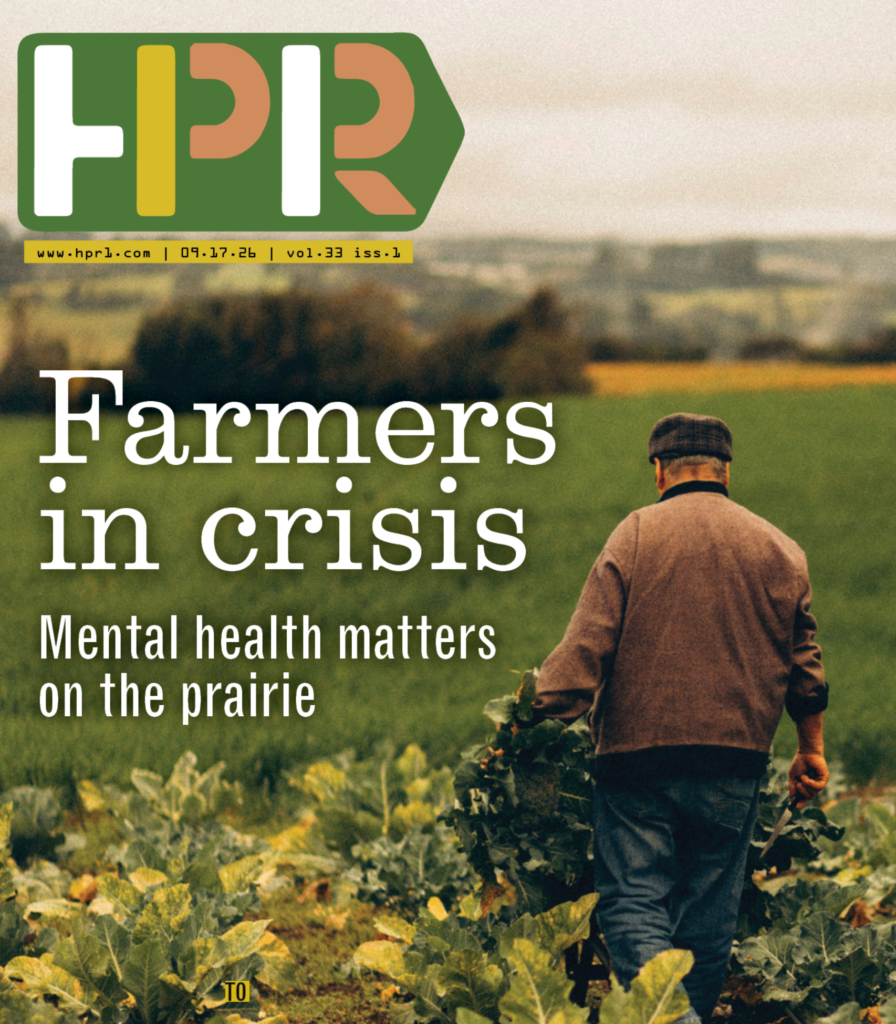
This story is the second of two stories about the challenges facing farmers in the upper Midwest. Read the first installation “Farmers in Crisis” here.
 A chat with AAA about high diesel pricesOct 14, 2026
 Fargo voters to choose between commission, council governments in OctoberAug 20, 2026
 Josh Boschee becomes Fargo’s first full time mayorJul 9, 2026
 Salvadoran-American shares immigration story, ICE fearsFeb 16, 2026
 The world watches Minneapolis after Renee Good shootingJan 19, 2026
 Fargo voters reject switch to ward-based council governanceOct 7, 2026