



Arts | February 23rd, 2026
By Jacinta Zens
While researching the upcoming exhibition, “Re-Arming Language: Post-Graffiti Artists,” which opens March 5 at the North Dakota Museum of Art (261 Centennial Dr. in Grand Forks), I spoke with graffiti expert and art acquisition consultant Joe Ellis. His unique backstory is so enthralling that I wanted to share our extended conversation with all of you.
HPR: How did you first become interested in graffiti?
Joe Ellis: The first time graffiti registered for me was along the railroad tracks that cut across south Minneapolis from Uptown to the river. In the 1990s, before it became the Midtown Greenway, it was a commercial train corridor. It wasn’t a place people were supposed to or wanted to be.
As kids in the area, we spent summers biking, skateboarding and exploring. The bridge underpasses along those tracks became something else entirely. They had turned into studios and galleries without anyone naming them that yet.
That’s where I first encountered painting in a serious way. Names like EWOK, EMER, YEN34, INTEL, MBER, CRISIS: wall after wall, under bridge after bridge. At the time, there wasn’t a conscious understanding of what I was seeing. It wasn’t “art” in my mind yet. It was curiosity. But it stuck. Something about it felt intentional.
Eventually, that stretch of track from Uptown to the river is where I began to recognize painting as something larger. The entrance near the Hennepin Avenue underpass was especially active.
Wall after wall, concrete embankment after concrete embankment, a forgotten industrial space reclaimed through painting. For at least a couple of generations, this became a living, changing outdoor laboratory and gallery. New work came in, older work got covered, and the language evolved in real time.
At the moment, I didn’t have words like hierarchy or lineage, but I felt it. Certain names carried weight: EWOK, YEN34, EMER, PRES, NIMS, VENT26, KEPT, EGON. The early crews TCM, AKB, MAS and eventually HM created the conditions for everything that followed.
Because that space existed, those artists were able to do the work needed to evolve graffiti from raw energy into a regional form of painting. It wasn’t random. It was disciplined. And it was happening completely outside any gallery system.
HPR: How did you go from that phase to where you are today? Did you study art in college?
JE: By my early teens, it was clear this wasn’t just a phase. As a high school senior, I was lucky to have access to Minnesota’s PSEO program, which allowed me to study drawing and painting at MCAD while still in high school. That gave me a foundation; how to look, how to make, how to stay with the work.
From there, I moved to New York City and studied Painting and Art History, earning my BFA in 2006. At the School of Visual Arts (SVA), I studied with artists like Michael Goldberg, Jack Whitten, Mary Heilmann, Marilyn Minter and Gary Simmons.
What school gave me was language, discipline, and exposure. What graffiti gave me was urgency and lived experience. The two were never separate for me; they were developing in parallel.
HPR: You mentioned that you worked in the arts in NYC when you were done with college. Can you tell me a bit about that?
JE: I’ve always worked. That didn’t change when I moved to New York. While I was in school, I worked at Utrecht Art Supplies on Fourth Avenue. Not long after that, I began working as a studio assistant to the painter Michael Goldberg.
After graduating and taking a trip to Europe, I began working in galleries. The first was Remy Toledo Gallery, then José Bienvenu Gallery. The place where I really found my people was CRG Gallery. I worked there before the financial crash in 2008, and then again during and after Hurricane Sandy, before moving back to Minneapolis.
In between working at CRG, I worked with the print dealer Susan Sheehan. I studied printmaking as a student, and Susan taught me the business side, how editions are bought, sold, valued, and placed. She works with postwar American masters and that experience continues to shape how I think about prints.
Day to day, my roles in the art world ranged from preparing galleries for installation, packing and shipping works, and coordinating art fair booths, to assisting artists with exhibition production, managing databases, handling sales, and working directly with collectors. I learned how the system actually functions, not just how it presents itself.
HPR: You spoke to me about the violence of language and how that ties into graffiti. I found that particularly interesting. Can you please explain that further?
JE: Language is more powerful than we tend to realize. While it can’t physically harm you, it can wound, distort and convince someone to believe something untrue about themselves. That kind of harm is a form of violence, used both systemically and on an individual level. We see and experience it constantly, words deployed deliberately to diminish, divide, and control.
Most graffiti writers begin as teenagers. My belief is that, in a sense, the medium often chooses them. At that age, artists are carrying experiences that feel irreconcilable, things they don’t yet have words for. There’s an internal pressure: an urge to destroy something, mirroring the pain, or to create something, mirroring the possibility of reclaiming it.
This idea was articulated to me through conversations with an art dealer who represented the late artist RAMMELLZEE in the 1980s. His writings on Gothic Futurism and Iconoclast Panzerism frame language itself as a weapon and graffiti as a way of liberating language from deeply embedded systems of harm.
This is something I’ve come to recognize in myself as well; how language has shaped my own perceptions and beliefs, intentionally and unintentionally.
Graffiti, at its core, is a pure form of painterly expression. It parallels painting’s long history and formal foundations. It’s generational, handed down, and practiced in the community. The intent can range from adolescent impulse to highly conscious resistance, but the throughline is creation and shared experience. There’s a kind of sorcery in that, finding others who understand the commonality without explanation and building a language together.
HPR: A large portion of the exhibition comes from works by artists from Burlesque of North America. What is your background with Burlesque?
JE: In the late 1990s, before the internet really took hold, most visual graffiti information circulated through zines. They were either handmade or mass-produced and almost everyone who was active then has a stack of them somewhere.
Life Sucks Die (LSD), produced by Burlesque of North America, was a source. As a teenager, this was how I saw local writers working alongside national artists. I collected those magazines and still have some of the originals. At the time, the anonymous authors were heroes. The work was inspiring, and the technical ability was something to witness firsthand.
The origin story matters. One of the original LSD collaborators, as a freshman at the University of Minnesota, worked overnight at Kinko’s. With access to printers and space, they essentially turned Kinko’s into a collaborative studio and built something legendary. That kind of resourcefulness is part of the lineage.
Years later, when I began Joe Ellis Art, my first projects included public murals, always produced from a curatorial position. My direct connection to Burlesque began through collaborations with George Thompson (EWOK), then the following year with Wes Winship. Through Wes and Mike, I was given access to the Burlesque archive.
Over the winter of 2025, I handled more than twenty years of material: limited-edition prints, collaborations with MF DOOM, work connected to local hip hop, concerts, museums, galleries and international artists. After seeing the depth of that archive and the prints in inventory, I developed the idea of creating print portfolios from the Burlesque catalog.
That became the initial connection to the North Dakota Museum of Art. They were among the first institutions to support the work and did so decisively.
If graffiti is the entry point, Burlesque represents the full circle.
HPR: Can you tell me more about the artists in the exhibition?
JE: I tend to pursue projects that excite me and then follow them with intention, from concept to release. Each exhibition develops out of lived experience, not a checklist or a trend.
The selection for UND ranges from local Minnesota designers to leading contemporary artists. But the exhibition begins with Burlesque of North America, not just as a print shop, but as a cultural producer, a gallery and a conduit for artists and activists. The qualifications were visual, visceral and tied to a real community.
Many of the works relate directly to graffiti, either made by graffiti writers, inspired by the culture, or responding politically to moments of transition. With the later inclusion of prints by ESPO, we’re looking at a later generation of writers/painters in New York. He’s one of the most articulate writers on the subject, and books like ”The Art of Getting Over” did for New York what Life Sucks Die did regionally.
The prints by Futura, Cey Adams, and Martha Cooper represent early train painters and documentarians moving into fine art editions. Rosson Crow and Bisa Butler represent prints by leading contemporary artists working at the highest level today.
The exhibition is anchored by works from SHOCK UC MSK from 2025, created during his self-supported residency in the abandoned Pillsbury Mill in Springfield, Illinois. SHOCK is central for me and for the show. He’s one of the most significant figures in visual art working today, moving between sculpture and painting, grounded in the Twin Cities lineage and now operating on a global level.
What matters most to me is honesty, proximity to the source and integrity of production. For audiences who may not know this history, I want them to see themselves in the work. Even if they don’t understand the context, I want them to feel something familiar. Historically, art is often dismissed before it’s understood. What graffiti shows us is contemporary painting evolving entirely outside the traditional gallery system.
HPR: What services can you provide for people interested in graffiti?
JE: I see my work falling into three primary roles.
First, the curator. This is the passion play. I’m focused on telling the story of Minnesota graffiti as a regional form of radical contemporary painting, through exhibitions, murals, editions, and one-of-a-kind works. The key is that the story is told from the artists’ point of view, in their own words. That’s how works by artists like BRLSQ, ESPO and SHOCK enter institutional collections like the North Dakota Museum of Art.
Second, the advisor. I work closely with collectors on a personal level, helping clarify what they’re drawn to, whether they’re motivated by investment, curiosity or a desire to live with meaningful work. I recommend acquisitions, negotiate purchases, handle logistics, framing, and installation and shape collections over time. From original works to prints, my role is to make sure clients are buying well.
Third, the broker. I sell works on behalf of collectors or entire collections. That involves determining current market value and outlining different strategies for bringing work to market, whether the priority is discretion, maximum return or both.
Most of my clients come through referrals. They’re often collectors looking to start, diversify, or people who want their homes to reflect their taste and values and trust that I can spot quality and significance.
What makes my practice different is the level of personal service, transparency and accountability. I’m building from an authentic place, with authentic collaborators and scaling slowly through trust. Everything I do is informed by a historical lens and focused on artists I believe to be truly significant.
Connect with High Plains Reader art reporter Jacinta Zens at jacinta.zens@gmail.com.
IF YOU GO:
“Re-Arming Language: Post-Graffiti Artists”
Opening and gallery talk with Joe Ellis on Thursday, March 5, 4:30 to 6:30 p.m.
Exhibit March 5-May 10
North Dakota Museum of Art, 261 Centennial Dr., Grand Forks, ND
June 15th 2026
May 19th 2026
April 24th 2026
April 15th 2026
April 15th 2026

By Bryce Vincent Haugen By all accounts, Democratic-Farmer-Labor U.S. Senator Amy Klobuchar — first elected in 2006 — is the most popular active politician in Minnesota, whether she’s judged by polling or by her four electoral…
Saturday, June 13, 10 a.m.- 5 p.m.Paradox Comics-N-Cards, 814 Main Ave., FargoCalling all nerds: it’s time to get down and nerdy with vendors aplenty, who are selling comics, toys, video games, board games, various collectibles…
June 6-7StatewideYou grab a line and I’ll grab a pole — and if you’re a North Dakota resident, you can head on down to your favorite fishing hole, no license needed (for this weekend, anyway). All other rules still apply…

By John Strand It took us over 30 years for us to reach out and ask for your help. The High Plains Reader has always been subscription free and paywall free. Our content has — and always will be — free to access for all of our…
By Ed RaymondWere women created to do the work of God?One of the first requests made by new Pope Leo XIV was to invite an expert on the alt-right conservative Catholic organization known as Opus Dei to brief him about its…
By Rick Gionrickgion@gmail.com Holiday wine shopping shouldn’t have to be complicated. But unfortunately it can cause unneeded anxiety due to an overabundance of choices. Don’t fret my friends, we once again have you covered…
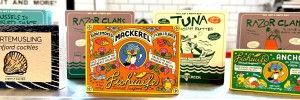
By Rick GionThe scarfing of canned fish and seafood products by online food influencer types is hard to miss on social media these days. Some of the consumed morsels range from exquisite to downright nasty. However, there are many…
By Bryce Vincent Haugen The curtain has come down on Jade Presents. Fargo-Moorhead’s largest event promoter has brought thousands of shows — more than 150 per year — and hundreds of artists to the area over the past 36 years. On…
__300x100.png)
By Greg Carlson Steven Spielberg, who will turn 80 this December, returns to the subject of aliens among us in “Disclosure Day,” his first feature since “The Fabelmans” in 2022. Now closer to the end than the beginning of…
By Jacinta Zens I recently sat down for a chat with ceramicist Louie Albertson, Clay and Studio Program Manager at the Plains Art Museum. Before the interview, I had the pleasure of getting to know him a bit as a colleague when I…
Saturday, January 31, 6:30-9 p.m.Transfiguration Fitness, 764 34th St. N., Unit P, FargoAn enchanting evening celebrating movement and creativity in a staff-student showcase. This is a family-friendly event showcasing pole, aerial…

By Annie Prafckeannieprafcke@gmail.com AUSTIN, Texas – As a Chinese-American, connecting to my culture through food is essential, and no dish brings me back to my mother’s kitchen quite like hotdish. Yes, you heard me right –…
By Sabrina Hornungsabrina@hpr1.comNew Jamestown Brewery Serves up Local FlavorThere’s something delicious brewing out here on the prairie and it just so happens to be the newest brewery west of the Red River and east of the…

By Eli Liverani Cholesterol is probably one of the first molecules I have ever heard of in my childhood. Most of the relatives on my mother's side had high cholesterol in their blood, and apparently, levels above a certain range…
January 31, 11 a.m. - 6 p.m.Viking Ship Park, 202 1st Ave. N., Moorhead2026 marks 10 years of frosty fun! Enjoy sauna sessions with Log the Sauna, try Snowga (yoga in the snow), take a guided snowshoe nature hike, listen to live…

Chris M. Stoner I was recently dismissed from my role as drag show director and emcee for Dakota OutRight, a role I had been fulfilling for more than two decades. The reason given? My political commentary during shows, while…