



Culture | December 18th, 2025
By Michael Miller
As the holiday season approaches, I extend Yuletide Best Wishes and a special “Weihnachten” greeting to you and your family. I would like to share with you Christmas memories from our Germans from Russia community. Please email me your Christmas memories at michael.miller@ndsu.edu.
Fargo resident Sister Collette Werlinger, born in 1931 on a farm near Napoleon, North Dakota, writes, “I fondly remember Santa coming, but never before dark, the cows were milked, and we were finished with supper. There would be a big knock on the door, and there was Santa with sleigh bells on his shoulders. In the bag were gifts with our names. We liked Santa, but we were afraid. He would tell us not to be afraid as he would not hurt us, and we were good. He also left peanuts and hard candy. As he walked, he rang the sleigh bells and kept on ringing them until he was outside where the horses and sleigh were waiting to take him to the neighbors. Then we would open our gifts.”
Greg Cossette of Post Falls, Idaho writes, “I was a small child with two sisters in Maxbass, N.D. in the early 1950s. We lived in a two-story home. During the winter, the snow had drifted across the front of the house. As my parents prepared the trip to visit my Schmidt grandparents (both who had immigrated from Russia) at Fessenden in Wells County, for Christmas. They suited us up with snowsuits, caps, boots, and gloves and sent us out the front door to tunnel out through the drift. All I remember, other than pictures, was that it was great fun, and a wonderful prelude to Christmas dinner with the grandparents. I didn’t understand any of the German that flowed within the Schmidt house, but the love, joy, and comfort remain in my heart to this day.” Greg’s Schmidt ancestral German villages are Helenthal, Black Sea, and Zurichtal, Crimea.
Marie (Eberle) Reid, who grew up in Vibank, Saskatchewan, shares, “We looked forward to having halva and nuts at Christmas. My parents always made root beer. This was served and, if neighbors visited us during the Christmas holidays, sometimes a bit of schnapps. We had turkey and cabbage rolls for supper with all the trimmings. My mother made two fruit cakes. We had one for Christmas, and she carefully wrapped the smaller one, and we had that for Easter. We also had gingerbread cookies, jams, different shapes of sugar cookies with frosting, matrimonial cake and my favorite date-filled oatmeal cookies for Christmas. Vibank in southern Saskatchewan was a predominantly German Catholic village. The sermon was in German. When I was little, I remember sleeping on the bench during the sermon. Church service was 1.5 to 2 hours.”
Fr. Leonard Eckroth, native of Mandan, North Dakota writes, “As a Catholic, we would follow the day of fasting before the feast. On Christmas Day in our home, we ate fish or a German dish like Rahmnoodla. As a family, we went to confession before Christmas. Our dad put the first ornament on the tree, starting with the star on the top. Us juniors put the tinsel on after the older brothers and sisters hung the lights and other decorations. My mother did a lot of baking like fruitcakes, cookies and special German-Swiss bread. Our folks and older siblings attended Midnight Mass while us youngsters were in bed, though we wanted to play with our Christmas gifts.”
Brother Placid Gross, of Assumption Abbey in Richardton, North Dakota, and a native of Napoleon, North Dakota comments, “The whole family of 13 children and my parents went to church for Midnight Mass at St. Anthony Church, 14 miles south of Napoleon. The church was decorated with a great big Christmas tree, and a large manger scene. The choir had practiced, so the music was fresh and loud. Then Christmas Day and many days following, there were many visits back and forth with the relatives and all the special food.”
Br. Placid specializes in folklore studies of the Germans from Russia. He has authored a new book, “Prairie Wisdom: Folklore of the Germans from Russia” and he was a member of the Journey to the Homeland tours to Germany and Odessa, Ukraine in 1996 and 2019.
Gerald Wagner, of St. Paul, Minnesota comments, “Our Christmas was very simple with our parents, brothers, and sisters as we did not travel or have visitors because at Christmas, we were usually snowbound. We were nearly two miles of hilly section line trail to the nearest graded road, so horses and bobsled were needed. We were seven miles south of Fredonia, N.D., in 1937, as the crow flies. We had canned meats, both pork and chicken, smoked hams, bacon, and homemade sausage my father made. We had plenty of potatoes and home baked bread. Everything was grown. We had no radio, telephone or newspaper. We played many board games and cards for entertainment.”
Mary Ebach of Rugby, North Dakota writes, “We would eat a meatless meal, usually dried fish, since we could only eat meat on Christmas Eve, open our presents, and get ready to go to Midnight Mass. After Mass, we went home with a meal of ham our mother had made, wrapped in dough to keep it moist and then baked, her vinegar and oil potato salad, goladetz, head cheese, and kucha. Our Mother passed around some homemade brewed Schnapps. Those fantastic memories are as vivid and happy as if it were yesterday, and we are grateful we came from a family that built those memories.”
Michael Miller is the man behind the Germans from Russia Heritage CollectionNorth Dakota State University Libraries, Fargo. For more information about the 24th Journey to the Homeland Tour to Germany and Ukraine (May 2022), donating a family history and/or photographs, or how to financially support the GRHC, contact Michael M. Miller, NDSU Libraries, Dept. 2080, PO Box 6050, Fargo, ND 58108-6050, 701-231-8416.
June 23rd 2026
June 8th 2026
April 24th 2026
February 23rd 2026
February 16th 2026
_(1)_(1)_(1)_(1)_(1)_(1)_(1)_(1)_(1)__293px-wide.jpg)
_(1)_(1)_(1)_(1)_(1)_(1)_(1)_(1)_(1)__293px-wide.jpg)
__293px-wide.jpg)
__293px-wide.jpg)
Summer is a tough time for families who depend on free or reduced-price school meals, so YMCA of the Northern Sky will provide nutritious, no-cost meals to kids 18 and under through August 26. Breakfast and lunch are available…

By Jeff Armstrong Despite a history dating back many centuries and a reputation as fierce resistance fighters, the Kurds remain the largest stateless nation in the world. Divided by colonial post-WWI borders and subsumed into four…

June 6-7StatewideYou grab a line and I’ll grab a pole — and if you’re a North Dakota resident, you can head on down to your favorite fishing hole, no license needed (for this weekend, anyway). All other rules still apply…

By John Strand It took us over 30 years for us to reach out and ask for your help. The High Plains Reader has always been subscription free and paywall free. Our content has — and always will be — free to access for all of our…

By Ed RaymondIf something can go terribly wrong, it will happen on planet EarthSomewhere in the universe, there may be a planet created by a Perfect God where there are no viruses, all babies are born at immaculate conceptions and…

By Rick Gionrickgion@gmail.com Holiday wine shopping shouldn’t have to be complicated. But unfortunately it can cause unneeded anxiety due to an overabundance of choices. Don’t fret my friends, we once again have you covered…
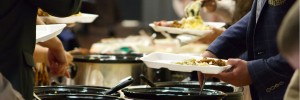
July 8th, 5:30-8 p.m.Viking Ship Park, 202 1st Ave. N., Moorhead We’re celebrating America’s 250th birthday, Minnesota style. Moorhead Parks and Recreation and HCSCC are hosting the ultimate potluck. Whether you’re bringing…
Tuesday, June 30, 7 p.m.Parachigo, 14 8th St. S., Fargo Inspired by folk and rock influences, Bielanski's upbeat catchy tunes have gone worldwide — literally. He’s played 2,500 shows, 311 of which were performed last year alone.…
__300x100.png)
By Greg CarlsonAlex Ross Perry follows his excellent “Pavements” by tackling the essay film with “Videoheaven,” a nearly 3-hour long analysis of the rise and fall of brick and mortar movie rental. Stimulating and satisfying…

By Jacinta Zens I recently sat down for a chat with ceramicist Louie Albertson, Clay and Studio Program Manager at the Plains Art Museum. Before the interview, I had the pleasure of getting to know him a bit as a colleague when I…

Saturday, January 31, 6:30-9 p.m.Transfiguration Fitness, 764 34th St. N., Unit P, FargoAn enchanting evening celebrating movement and creativity in a staff-student showcase. This is a family-friendly event showcasing pole, aerial…

By Annie Prafckeannieprafcke@gmail.com AUSTIN, Texas – As a Chinese-American, connecting to my culture through food is essential, and no dish brings me back to my mother’s kitchen quite like hotdish. Yes, you heard me right –…

By Sabrina Hornungsabrina@hpr1.comNew Jamestown Brewery Serves up Local FlavorThere’s something delicious brewing out here on the prairie and it just so happens to be the newest brewery west of the Red River and east of the…

By Eli Liverani It was in the mid-90s when I heard of homeopathy for the first time. I was at university, and it was through word of mouth. Some friends were seeking homeopathy to solve minor health issues, such as weight gain,…

January 31, 11 a.m. - 6 p.m.Viking Ship Park, 202 1st Ave. N., Moorhead2026 marks 10 years of frosty fun! Enjoy sauna sessions with Log the Sauna, try Snowga (yoga in the snow), take a guided snowshoe nature hike, listen to live…

Chris M. Stoner I was recently dismissed from my role as drag show director and emcee for Dakota OutRight, a role I had been fulfilling for more than two decades. The reason given? My political commentary during shows, while…