



Wellness | May 26th, 2026
By Eli Liverani
Cholesterol is probably one of the first molecules I have ever heard of in my childhood. Most of the relatives on my mother's side had high cholesterol in their blood, and apparently, levels above a certain range are a risk of cardiovascular diseases. The treatment focused on their diet; limit dairy and egg consumption and lose weight. Some of them were successful just by changing their diet, but in some cases, they had to take some pills. Although they were able to get their cholesterol back in a healthy range, they still had to stick to their treatments all the time. On my father's side, cholesterol levels were always in range, despite their diet and lifestyle.
My humble family seems to represent the whole population (worldwide) then and today.
What is cholesterol? And why is it so relevant?
Cholesterol is a molecule that keeps our cells healthy, every cell in every organ in our body. Our brain, for instance, is made of a large amount of cholesterol. Our bodies can make cholesterol from other molecules and/or recycle it, so an external source is not required.
To reach the various cells, cholesterol travels in the blood, packed into spheres, which are called lipoproteins. They can be low or high density, called LDL and HDL, respectively. The LDL delivers the cholesterol to the cells, while the HDL clears the excessive LDL in the circulation. When LDL increases in the blood and is not properly cleared by HDL, it may stick to the wall of a vessel. Multiple LDLs sticking together can create a plaque — and if the plaque grows, it can obstruct your vessel and block the flow. That is what can develop thrombosis, heart disease and stroke.
Do people with high cholesterol necessarily develop heart disease?
No, but you increase your chances. Think of a ladder, with heart diseases on top. If you have high cholesterol, you are one step closer to the top. If you have high cholesterol and high blood pressure, you are two steps closer and so on. In the end, you want to be as far away from the top as possible, but one single step won’t bring you there. Plants do have a different molecule (phytosterol), which is why an external source of cholesterol in our diet has to come from animal products (dairy, milk, and egg yolk).
So, should you become vegan? Not fully vegan, but drastically decreasing egg (yolk) consumption and switching from butter to vegetable oil was recommended to my family when I was younger. A nutritionist is the best person to ask, but it does not seem to be the sole solution anymore. In fact, some vegans still have high cholesterol! If you keep fat intake around 10% (as recommended in the new dietary guidelines), and you have a healthy lifestyle, it may not matter if you introduce new cholesterol through animal products.
For your palate and soul, it may be a different story.
High cholesterol levels (LDL) can be detected in people with metabolic diseases, such as obesity and diabetes, but not necessarily. Indeed, some people can change their diet and restore a healthy level of “traveling cholesterol,” but unfortunately, it is not one-size-fits-all.
Other factors that contribute are stress, smoking, lack of exercise and an unhealthy diet. So, lifestyle changes can be the next steps. Again, in some cases, the levels stay high. Skinny, active people with a healthy diet can have high cholesterol, too. Excessive exercise can contribute to high cholesterol.
The overall metabolism of cholesterol is complex and, therefore, difficult to restore when a problem occurs. Genetics play a big role, too, and we cannot change our genetics — at least, not yet.
Lately, cholesterol levels (LDL) have been questioned as a reliable predictor of heart disease. In fairness, some studies show that the correlation between high cholesterol and cardiovascular disease incidence is not always strong. Should we find another (or more) appropriate predictor(s) for heart diseases? Yes! That is science, always reaching for better. However, having a high amount of LDL in your blood can increase the chances of sticking to your vessels. Therefore, it is always wise to restore a healthy range.
The evaluation on which action to take should come from your doctor, who will evaluate your overall health: other parameters, such as HDL or triglyceride, for example, your glucose levels, other diseases, and so on. You may have to try various strategies until you find your own, but it will be worth it.
June 23rd 2026
March 23rd 2026
February 16th 2026
December 18th 2025
November 18th 2025
_(1)_(1)_(1)_(1)_(1)_(1)_(1)_(1)_(1)__293px-wide.jpg)
_(1)_(1)_(1)_(1)_(1)_(1)_(1)_(1)_(1)__293px-wide.jpg)
__293px-wide.jpg)
__293px-wide.jpg)

Summer is a tough time for families who depend on free or reduced-price school meals, so YMCA of the Northern Sky will provide nutritious, no-cost meals to kids 18 and under through August 26. Breakfast and lunch are available…

By Jeff Armstrong Despite a history dating back many centuries and a reputation as fierce resistance fighters, the Kurds remain the largest stateless nation in the world. Divided by colonial post-WWI borders and subsumed into four…

June 6-7StatewideYou grab a line and I’ll grab a pole — and if you’re a North Dakota resident, you can head on down to your favorite fishing hole, no license needed (for this weekend, anyway). All other rules still apply…

By John Strand It took us over 30 years for us to reach out and ask for your help. The High Plains Reader has always been subscription free and paywall free. Our content has — and always will be — free to access for all of our…

By Ed RaymondCongratulations! A world record held by Trumplican Party and NRA!During the Minnesota Legislature’s discussion of gun controls, Republican State Senator Drew Roach of Farmington said he would never ban assault…

By Rick Gionrickgion@gmail.com Holiday wine shopping shouldn’t have to be complicated. But unfortunately it can cause unneeded anxiety due to an overabundance of choices. Don’t fret my friends, we once again have you covered…

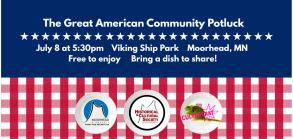
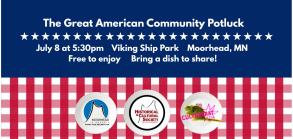
July 8th, 5:30-8 p.m.Viking Ship Park, 202 1st Ave. N., Moorhead We’re celebrating America’s 250th birthday, Minnesota style. Moorhead Parks and Recreation and HCSCC are hosting the ultimate potluck. Whether you’re bringing…

Tuesday, June 30, 7 p.m.Parachigo, 14 8th St. S., Fargo Inspired by folk and rock influences, Bielanski's upbeat catchy tunes have gone worldwide — literally. He’s played 2,500 shows, 311 of which were performed last year alone.…
__300x100.png)
By Greg Carlson The feature directorial debut of established internet phenomenon and entertainment hyphenate Hayley Kiyoko — known unironically to her fans as “Lesbian Jesus” — carries with it a curious backstory becoming more…

By Jacinta Zens I recently sat down for a chat with ceramicist Louie Albertson, Clay and Studio Program Manager at the Plains Art Museum. Before the interview, I had the pleasure of getting to know him a bit as a colleague when I…

Saturday, January 31, 6:30-9 p.m.Transfiguration Fitness, 764 34th St. N., Unit P, FargoAn enchanting evening celebrating movement and creativity in a staff-student showcase. This is a family-friendly event showcasing pole, aerial…

By Annie Prafckeannieprafcke@gmail.com AUSTIN, Texas – As a Chinese-American, connecting to my culture through food is essential, and no dish brings me back to my mother’s kitchen quite like hotdish. Yes, you heard me right –…

By Sabrina Hornungsabrina@hpr1.comNew Jamestown Brewery Serves up Local FlavorThere’s something delicious brewing out here on the prairie and it just so happens to be the newest brewery west of the Red River and east of the…

By Eli Liverani It was in the mid-90s when I heard of homeopathy for the first time. I was at university, and it was through word of mouth. Some friends were seeking homeopathy to solve minor health issues, such as weight gain,…

January 31, 11 a.m. - 6 p.m.Viking Ship Park, 202 1st Ave. N., Moorhead2026 marks 10 years of frosty fun! Enjoy sauna sessions with Log the Sauna, try Snowga (yoga in the snow), take a guided snowshoe nature hike, listen to live…

Chris M. Stoner I was recently dismissed from my role as drag show director and emcee for Dakota OutRight, a role I had been fulfilling for more than two decades. The reason given? My political commentary during shows, while…